
The story of aviation is a narrative of human aspiration, technological innovation, and the unyielding desire to explore beyond terrestrial boundaries. This journey from the earliest flights to the complex global networks of today underscores a relentless pursuit of progress and connectivity. Our timeline invites you to explore pivotal moments in this remarkable history.
December 17, 1903
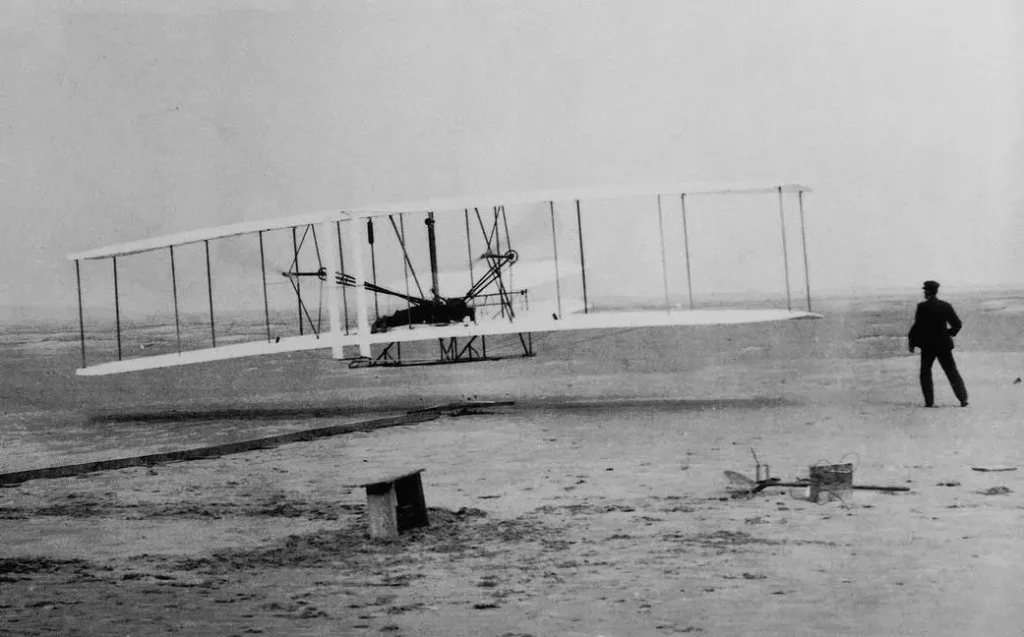
1903 – The Wright Brothers’ First Flight:
On December 17, 1903, Wilbur and Orville Wright achieved the first powered, controlled, and sustained flight, covering 120 feet in 12 seconds. This momentous event at Kitty Hawk, North Carolina, marks the birth of modern aviation.
January 1, 1914
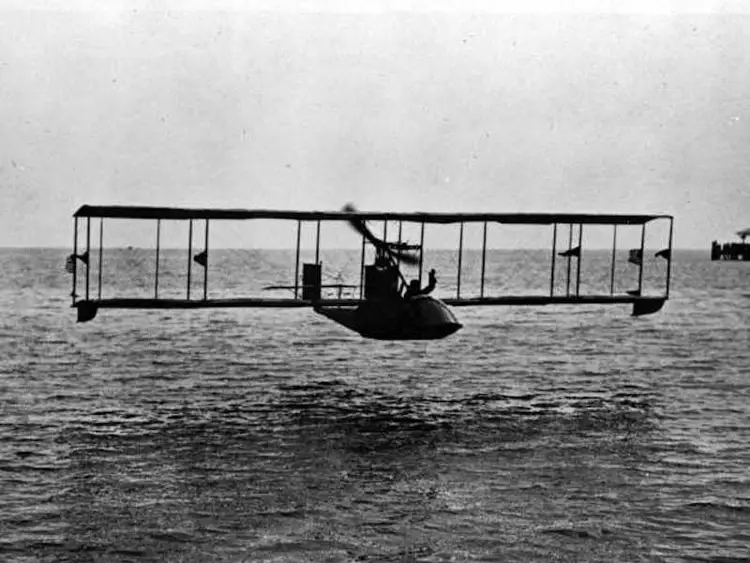
1914 – The First Commercial Flight:
The St. Petersburg-Tampa Airboat Line became the world’s first scheduled commercial passenger airline on January 1, 1914. It signaled the potential of aviation for commercial transport.
May 20-21, 1927
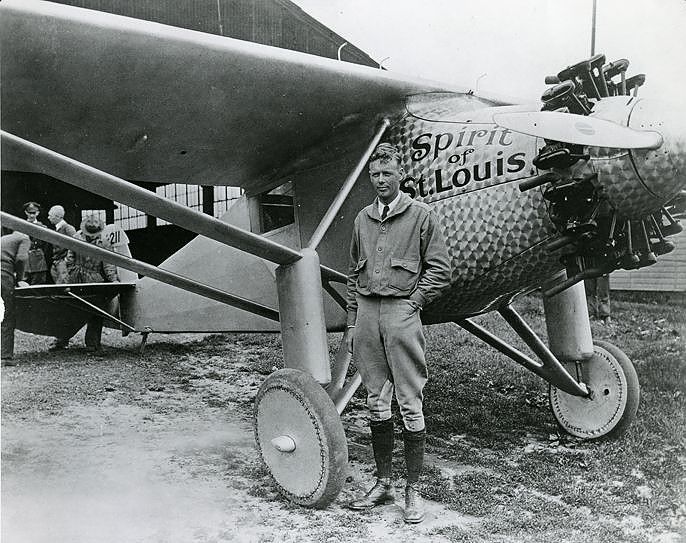
1927 – Charles Lindbergh’s Solo Transatlantic Flight:
Charles Lindbergh made history by flying non-stop from New York to Paris on May 20-21, 1927. This solo flight highlighted the possibilities of long-distance air travel.
December 7, 1944

1944 – The Chicago Convention:
In the wake of World War II, nations united to establish the International Civil Aviation Organization (ICAO), laying the groundwork for peaceful and cooperative global air travel. The Chicago Convention set standards and regulations necessary for aviation safety, security, efficiency, and environmental protection.
April 4, 1947

1947 – Establishment of ICAO:
Officially coming into existence in 1947, the ICAO has played a pivotal role in fostering international cooperation in aviation. Its mission is to support the safe, efficient, secure, economically sustainable, and environmentally responsible development of international air transport.
October 14, 1947

1947 – First Person to Break The Sound Barrier
Test pilot Chuck Yeager flew the Bell X-1 rocket plane faster than the speed of sound, marking a significant breakthrough in aviation technology.
1952

1952 – Introduction of the Jet Age:
The de Havilland Comet, the world’s first commercial jet airliner, began service in 1952, revolutionizing air travel with its speed and efficiency.
December 20, 1957

1957 – Boeing’s First Engine Airliner
The Boeing 707 introduced the era of commercial jet travel, achieving greater speed and comfort than previous propeller-driven aircraft.
April 9, 1967

1968 – Introduction of The 737
The Boeing 737 became one of the most popular and widely used jet airliners in the world, with numerous variants and continued production to this day.
May 4, 1967

Tupelov Tu-134 first flight
The Tupolev Tu-134, a twin-engined, narrow-body airliner, made its maiden flight in the Soviet Union.
September 30, 1968

1969 – The Arrival of the Jumbo Jet
The introduction of the Boeing 747, the world’s first wide-body airliner, transformed global travel. Its capacity and range revolutionized international travel, connecting cities and continents like never before.
March 2, 1969

1970 – First Flight of Concorde
The Concorde was the first supersonic airliner to carry passengers while breaking the sound barrier. The Concorde achieved a world record by flying from New York to London Heathrow Airport in under 3 hours.
28 September 1972

1970 – First Flight of The Airbus A300
Airbus accomplished its first flight of the Airbus A300 aircraft in 1970. The Airbus A300 is more lighter and faster than other wide body aircrafts and is also fuel efficient
February 22, 1988

1988 – Introduction of the Airbus A320
The Airbus A320 family, featuring fly-by-wire technology and a common cockpit layout, revolutionized single-aisle aircraft design and became a best-seller in the aviation industry.
December 21, 1988

1988 – Introduction of the Antanov 225 Mriya
As the world’s largest cargo aircraft, The Antonov An-225 Mriya, the world’s largest cargo aircraft, made its maiden flight on December 21, 1988.
April 9, 1994

1994 – Built By Computer
The Boeing 777-200 is the first aircraft designed by Boeing entirely in computer design software. The first 777 rolled of the assembly line on April 9, 1994 and made its first flight on June 12, 1994
April 27, 2005

2005 – Maiden Flight of The Airbus A380
The world’s largest passenger airliner and the only full-length double-deck jet airliner took off for its first time. The A380 is the world’s largest passenger airliner, capable of carrying between 500 to 850 passengers, depending on the configuration. It was designed to address the increasing demand for air travel, particularly in densely populated regions and congested airport hubs.
December 15, 2009

2009 – Boeing 787’s First Flight
The Boeing 787 Dreamliner long-range mid-size widebody twinjet, largely constructed of carbon fiber material, makes its first flight. The 787 Dreamliner is a revolutionary aircraft in the commercial aviation industry, notable for its extensive use of composite materials, advanced aerodynamics, and fuel-efficient engines. These features enable the Dreamliner to offer significant improvements in fuel efficiency, range, and passenger comfort compared to previous aircraft models.
June 14, 2013

2013 – First Flight of The A350
The Airbus A350 made its maiden flight on Toulouse-Blagnac Airport in France, where Airbus has its main assembly line. The A350 is a long-range, wide-body jet airliner developed by Airbus to compete with the Boeing 787 Dreamliner and the larger Boeing 777 series. It has advanced aerodynamics, composite materials, and new engine technologies to improve fuel efficiency and passenger comfort.