
Introduction
The aviation industry stands at the forefront of technological innovation, continually evolving to enhance efficiency, safety, and environmental sustainability. This section explores the cutting-edge technologies shaping the future of aviation, from sustainable fuels to virtual reality and beyond.

Current Trends
The push for greener, more efficient aviation is driving significant advancements in technology:

Biofuels
Sustainable Aviation Fuels, derived from biomass and waste resources, are emerging as the cornerstone of eco-friendly air travel. Unlike conventional jet fuel, SAFs can reduce carbon emissions by up to 80% over their lifecycle, offering a greener alternative that aligns with global sustainability goals. The integration of SAF into commercial aviation is a critical step toward achieving carbon-neutral growth. Airlines worldwide are beginning to adopt SAF for regular operations, though challenges such as production scalability and cost remain.

Electric Aircraft
The quest for zero-emission aviation has accelerated the development of electric and hybrid-electric propulsion systems. These technologies promise to reduce the environmental footprint of air travel, decrease noise pollution, and lower operational costs. Projects like the Airbus E-Fan X and the Boeing-backed Zunum Aero are pioneering efforts in electric aviation, aiming to introduce short to medium-range electric flights within the next decade.

Advancements in Air Traffic Management Systems
Modern air traffic management (ATM) technologies, including NextGen in the United States and SESAR in Europe, are enhancing the efficiency and safety of air travel. These systems integrate state-of-the-art satellite navigation and digital communication to optimize flight paths, reduce congestion, and minimize delays, all while improving fuel efficiency and reducing emissions.
Virtual and Augmented Reality
The application of virtual reality (VR) and augmented reality (AR) in aviation is transforming training and passenger experiences.
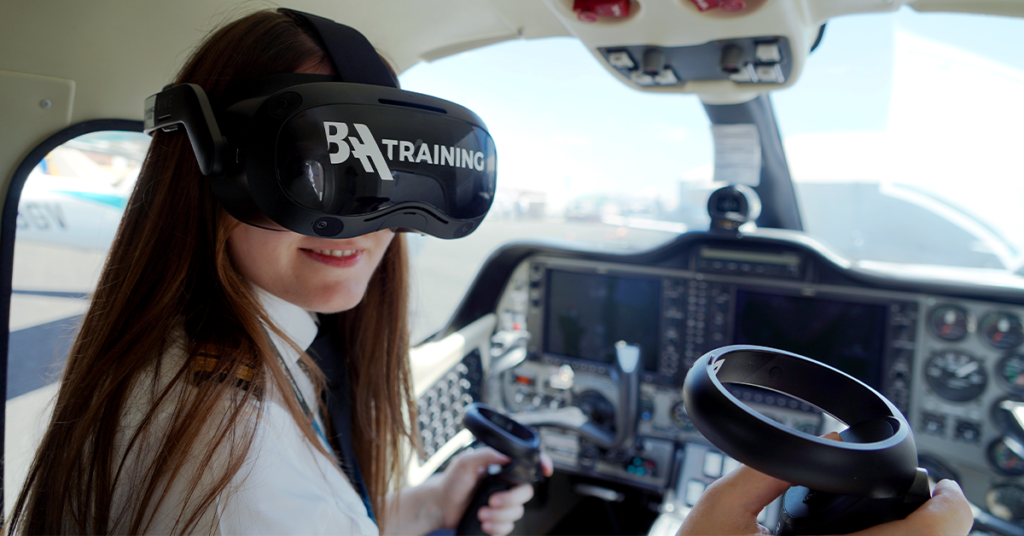
Pilot and Maintenace Training
VR and AR offer immersive, realistic training environments for pilots and maintenance crews, enabling them to practice complex procedures without the risks associated with real-life training. Leading training centers and airlines are adopting these technologies for everything from emergency response drills to routine maintenance checks, enhancing skill acquisition and retention.
Enhancing Passenger Experience
Airlines are beginning to use VR and AR to upgrade the passenger experience, offering virtual windows, in-flight entertainment systems, and immersive travel experiences. For instance, Qantas Airlines has paired up with Samsung and provides VR headsets to first-class passengers, allowing them to explore their destination or watch movies in a private cinema environment.

Innovations on the Horizon
Supersonic Travel: After years of research and development, the return of supersonic passenger travel is on the horizon. New technologies aim to overcome the challenges of noise and high operational costs that plagued earlier generations of supersonic aircraft. Companies like Boom Supersonic are leading the charge, promising to halve travel times across the globe.
Space Tourism: The dream of commercial space travel is closer than ever, with companies such as SpaceX, Blue Origin, and Virgin Galactic making strides towards making space tourism a reality. These ventures are not only a testament to human ingenuity but also signal the potential for entirely new forms of aviation and travel.

The technological landscape of aviation is rapidly evolving, driven by the quest for efficiency, safety, and sustainability. As these innovations mature and enter mainstream use, they promise to transform the aviation industry in ways we are just beginning to imagine.